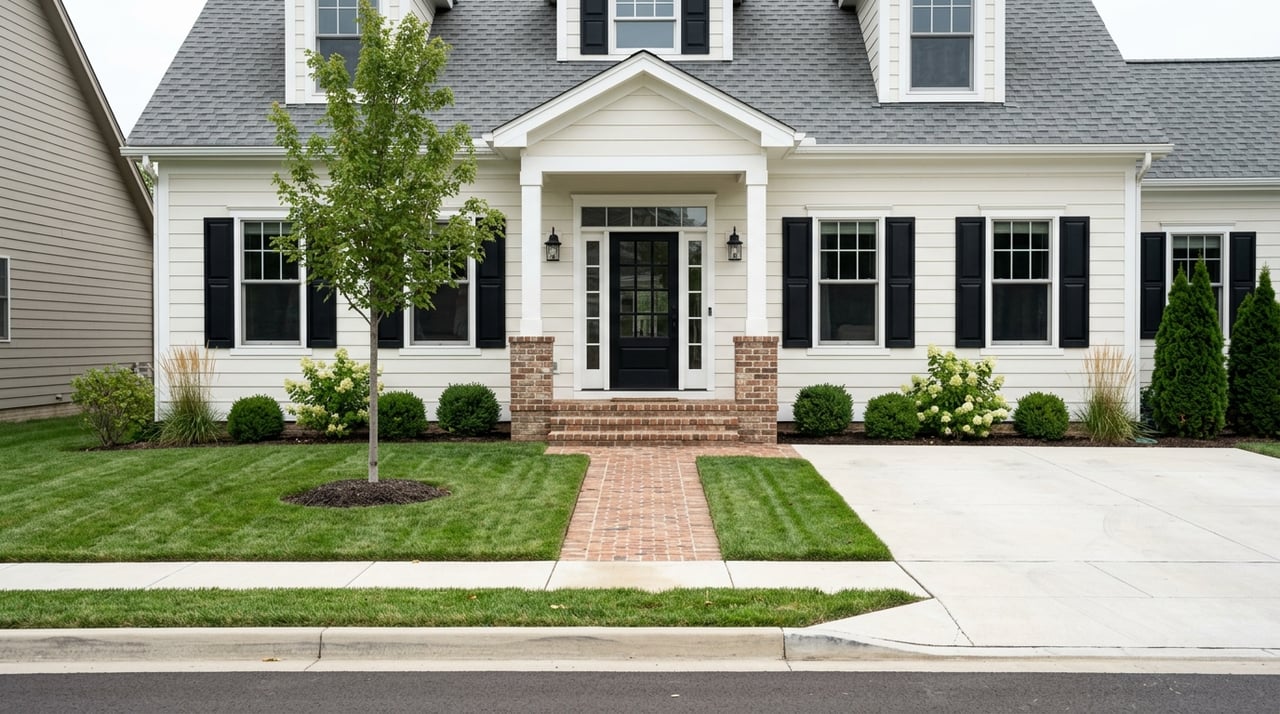
Fenton New Construction vs Older Homes: What Fits You?
July 23, 2026
July 23, 2026
Trying to choose between a brand-new subdivision and an older street in Fenton? It sounds simple until you start comparing HOA fees, lot sizes, floor plans, and day-to-day upkeep. If you want a clearer way to weigh your options in 63026, this guide will help you compare what newer neighborhoods and established streets often offer so you can focus on the fit that makes the most sense for your lifestyle. Let’s dive in.
In Fenton, newer subdivision development is shaped by local zoning and plat review, not just the home itself. The city’s Community Development Department handles subdivision applications, rezoning, site development plans, and zoning approval before construction. Local standards also address things like buildable lots, underground service connections, streetlights, easements, and landscaping plans.
Planned development rules are also designed to allow flexibility while preserving features such as topography, tree cover, and natural water features. That matters because a newer neighborhood is often planned as a full community, not just a collection of individual lots. As a buyer, that can affect everything from the look of the streetscape to the amount of shared common ground.
Current Fenton-area examples like Winding Meadows and Winding Bluffs Addition offer a useful snapshot of newer housing choices. These communities are marketed from the $300s to the $400s, with ranch and two-story floor plans that generally include 2 to 4 bedrooms. Winding Bluffs also highlights shared amenities like a pickleball court, athletic field, dog park, trails, and a community lake.
Based on current listings and community information, newer subdivisions in the area often feature more standardized lot sizes and a smaller set of repeated floor plans. That can make the search process feel more straightforward if you like predictable options. It can also mean the neighborhood has a more consistent appearance from one home to the next.
Examples in Winding Meadows show lots around 5,227 square feet, 6,970 square feet, 7,841 square feet, 8,712 square feet, and about 0.35 acre. A Winding Bluffs listing shows a 0.26-acre lot. These examples suggest that many newer lots in Fenton are under half an acre, though each subdivision is different.
It is also important to look beyond the raw lot size. Fenton subdivision rules can place detention or retention areas and access easements within common land in some developments. That means total acreage does not always tell you how much private, usable yard space you will actually enjoy.
Established streets in 63026 tend to be more varied than newer subdivisions. Instead of seeing a short menu of floor plans and similar lot layouts, you may find wider differences in age, acreage, style, and ownership structure from one property to the next. That variety is one of the biggest reasons some buyers are drawn to older areas.
Local examples show just how broad that range can be. One 1968 ranch on Fenton Hills Road sits on a 0.29-acre lot with no HOA. Another established-home example on Ferndale Drive is a 1968 custom ranch on 2.87 acres with monthly HOA dues, and a 1995 home on River Hills Drive sits on 1.1 acres.
One common assumption is that established streets automatically come with no HOA. In Fenton, that is not always true. Local examples include no-HOA homes, modest-HOA communities, and larger homesites with their own fee structure.
The key point is simple: the age of a neighborhood does not tell you everything about how ownership will feel. You still need to review dues, restrictions, shared responsibilities, and common-area arrangements on a property-by-property basis.
Established streets often offer more variety in home style and lot shape. You may find ranch homes, custom homes, larger acreage parcels, or streets where no two homes feel exactly alike. For some buyers, that individuality is a major plus.
At the same time, more variation can mean more research. You may need to compare homes with very different layouts, update levels, and maintenance histories before deciding what offers the best value.
The best choice usually comes down to what matters most to you. In Fenton, the difference is not simply new versus old. It is often structure versus variety, shared amenities versus more individualized lots, and builder-driven design versus a broader mix of home types.
Here are the main areas to compare as you shop.
In the local examples, newer communities are commonly marketed in the $300s to $450s. Their lots are often below half an acre. Established-home examples range from a 0.29-acre ranch to homesites of 1.1 acres and 2.87 acres.
If yard space is a top priority, established streets may give you more room to work with. If you want a more streamlined shopping experience with newer finishes and a narrower price band, a new subdivision may feel easier to navigate.
In one Winding Meadows example, annual HOA dues of $525 covered maintenance grounds, parking and roads, and common-area maintenance. Other newer communities may include shared amenities and common-ground use. On established streets, HOA costs and coverage can vary just as much, though the structure may look different from one neighborhood to another.
Instead of asking whether a home has an HOA, ask what the dues actually cover. Road maintenance, snow removal, grounds care, and common-area upkeep can all affect your monthly or annual costs and your day-to-day responsibilities.
Newer communities like Winding Meadows and Winding Bluffs use a smaller set of repeated floor plans. That may appeal to you if you want a home with a more current layout and a simpler decision process. It can also make it easier to compare one available home against another.
Established streets usually offer more variety in design and site layout. If you care about finding a more distinct home or a less uniform street feel, that wider mix may work in your favor.
One newer Winding Bluffs listing highlights a 10-year builder’s warranty. Older homes, including 1968 examples in Fenton, may place more focus on inspections, system age, and future upkeep planning. That does not mean an older home is a poor choice, but it does mean your evaluation process may be different.
If low early maintenance is high on your list, newer construction may feel more comfortable. If you are open to a home with more history and understand the value of a thorough inspection, an established street may open up more options.
Newer subdivisions may appeal to buyers who want shared amenities, a more predictable buying experience, and fewer design decisions. Established streets may appeal to buyers who want more privacy, more yard variety, or a more individual street character. In Fenton, both paths can be a good fit depending on how you live and what you value most.
This is why the choice is personal. A buyer focused on recreation and neighborhood amenities may rank options very differently than a buyer who wants extra land or a custom-home setting.
Before you choose between a new neighborhood and an established street, it helps to slow down and compare the details that affect daily life. A home can look great online and still feel very different once you understand the lot, the subdivision structure, and the long-term upkeep picture.
Use this checklist as you narrow your options:
In Fenton, the details can vary a lot from one subdivision or street to the next. A newer home does not always mean the same fee structure, and an older home does not always mean no HOA or a small lot. The smartest move is to compare each property in context rather than relying on broad assumptions.
That is where local market knowledge can save you time. When you know how to read past the listing photos and focus on lot use, community structure, and long-term fit, you can make a more confident decision and avoid surprises later.
Whether you are drawn to a newer neighborhood with shared amenities or an established street with more variety, the right choice is the one that fits your budget, space needs, and daily routine. If you want help comparing homes in Fenton and the surrounding Jefferson County area, connect with Traci Palmero for a personalized plan.
Stay up to date on the latest real estate trends.


As a multi-lingual real estate expert with designations like ABR, PSA, SFR, and SRS, Traci brings unmatched skill in handling complex transactions. More than just an agent, she's your trusted partner, ensuring informed decisions and a smooth process every step of the way.