The Two Rulebooks Behind Every St. Charles Listing
September 10, 2026
September 10, 2026
Back in April 2026, a St. Charles church asked the city for permission to tear down six buildings along South Seventh Street and First Capitol Drive to make room for an early childhood center. One of those buildings dates to the 1850s. Another is a converted gas station and mechanic's garage from the 1920s. The city's Historic Landmarks Board split on the request, clearing the older house for demolition while blocking the gas station, and a resident architect showed up to argue that the property might be one of the last buildings of its kind still standing in town.
That fight is not really about one gas station. It is a visible flare-up of a rule that governs a much larger stretch of St. Charles than most buyers realize, and it will not show up in a listing photo, a square footage figure, or a median price. If you are comparing neighborhoods in St. Charles right now, the number you have already seen on a portal is telling you less than you think. What it will not tell you is which of two entirely different rulebooks applies to the house once you own it.
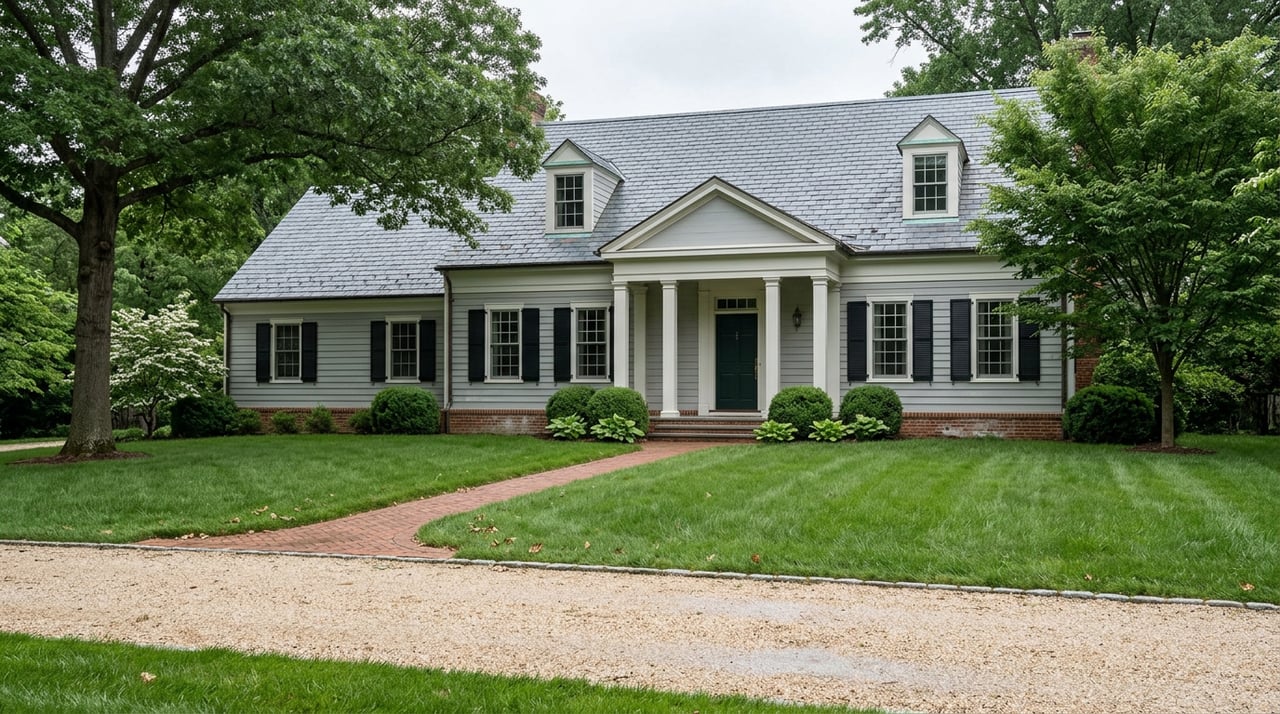
St. Charles has designated six historic districts covering more than 3,000 properties: South Main, Historic Downtown, Frenchtown, Commons, Landmarks, and the Extended Historic Preservation District. Buy inside one of those boundaries and you are not just buying a house with older bones. You are buying into a city ordinance enforced by the Historic Landmarks Preservation and Architectural Review Board, known locally as HLPARB, which meets once a month, generally on the fourth Monday, to decide what you are allowed to do to your own exterior.
The list of things that trigger review is longer than most first-time buyers expect. Replacing windows or doors. Swapping out siding. Rebuilding a porch. Installing a fence. Any of it can require a Certificate of Appropriateness application before a contractor breaks ground, and demolition or new construction gets the same scrutiny. Routine maintenance is usually exempt, but the line between maintenance and a change the board wants to weigh in on is exactly the kind of judgment call that turned a gas station into a months-long argument.
The city is not hiding this from anyone. The preservation ordinance is public record and the design guidelines for each district exist precisely so a homeowner can look up what is expected before they call a contractor. But it is not the kind of detail a buyer typically thinks to ask about while touring a brick two-story on Monroe Street with a detached garage off the alley, priced in the low $200,000s alongside other historic-core listings that run up toward the mid-$300,000s for a similar-sized bungalow closer to Benton Avenue. The price difference between those two houses might come down to a kitchen remodel. The difference in what you are permitted to do to either one afterward comes down to which district line you are standing on.
There is also a financial incentive layered on top of the restriction, and it changed recently. In December 2025, the City Council adopted new guidelines for the historic preservation grant program, shifting the funding to focus specifically on facade renovations. Eligibility now requires a property to have been built in 1945 or earlier, or to individually contribute to a local or national historic district. It is a real subsidy for owners doing the kind of exterior work the Landmarks Board already wants to see, but it is also confirmation that the city expects historic-core owners to be doing that work under its guidelines, not around them.
New Town at St. Charles operates nothing like the historic core, and it is not because it skipped the paperwork. It runs on a different kind of authority entirely. Started in 2003 as a New Urbanist community planned across roughly 755 acres and eventually some 5,700 homes, condos, and apartments, New Town is governed by developer covenants rather than a city preservation ordinance. Builders including Whittaker and Houston Homes work from an approved palette of 27 exterior colors. Lots run small by St. Charles County standards, with examples under a tenth of an acre, and the tradeoff for that density is a walkable grid of lakes, footbridges, and a town center that residents can reach on foot or by golf cart.
New Town also has its own funding mechanism, and it is not a homeowners association fee. A resale fee of 0.2 percent gets added to the sale price of every home sold in the community, typically paid by the seller, and it flows into something called the New Town Trust rather than into HOA dues. On a $400,000 sale, that is $800 at closing, funding shared infrastructure the same lakes and greens that make the community distinct. New construction sales are exempt. Resales are not.
Put the two systems side by side and the contrast is not really about old versus new. It is about who holds the pen when you want to change something.
| Historic core (six districts) | New Town at St. Charles | |
|---|---|---|
| Who decides exterior changes | HLPARB, a city board created by ordinance | Developer covenants and an approved color palette |
| What triggers review | Siding, windows, doors, porches, fences, demolition, new construction | Exterior color choice, generally within pre-approved options |
| Extra cost or incentive | Facade grant program for pre-1945 or contributing structures | 0.2% resale fee funding the New Town Trust, waived on new construction |
| Recent flashpoint | April 2026 demolition dispute over an 1850s house and a 1920s gas station near Frenchtown | None comparable found in current research |
Zoom out to the whole city and the market looks almost sleepy. Over the three months ending in April 2026, St. Charles homes sold at a median of $341,000, up just 0.2 percent from the same period a year earlier, with homes moving in roughly two weeks. That is the number most buyers see first, and on its own it suggests a flat, unremarkable market.
It is not describing one market. As of April 2026, New Town's median sale price for houses over the trailing twelve months stood at $381,810, an 8 percent increase, with homes there selling in about 28 days against a national average closer to 55. Meanwhile the historic core has plenty of inventory sitting well under the citywide median, houses in the $227,000 to $255,000 range that need real work before they resemble the turnkey homes down the street. A flat citywide number can only exist if one submarket is climbing while another sits still, and that is exactly what is happening here.
For a buyer, the practical read is this: the citywide median tells you almost nothing about what you will pay in either submarket, and it tells you even less about what you will be allowed to do once you close. A New Town buyer is choosing a resale fee and a color palette. A historic-core buyer is choosing a monthly board meeting and a Certificate of Appropriateness form. Neither is a worse deal. They are different deals, and the median price treats them as interchangeable.
Before falling for a fixer-upper's price, find out which district it sits in and pull the design guidelines for that district specifically. If you are picturing a screened porch, a metal roof, or a fence in the side yard, ask the Landmarks Board question before you ask the contractor question, because the answer can change your renovation budget and your timeline regardless of what the house costs to buy. If a legislator is writing public letters about preserving a building near your prospective street, as State Representative Travis Wilson did in February 2026 for a landmark near Frenchtown, take it as a signal that the preservation ordinance here has real political weight behind it, not just paperwork.
If New Town is on your list instead, ask what the resale fee looks like on the specific home you are considering and confirm whether it is new construction, which is exempt, or a resale, which is not. Ask about the color palette if you have strong opinions about your front door. Neither question will show up on a listing sheet. Both will show up the first time you try to change something.
Does the historic preservation ordinance apply to interior work? No. The Certificate of Appropriateness process is about exterior changes, additions, demolition, and new construction. Interior renovations generally fall outside Landmarks Board review.
Is the New Town resale fee the same as an HOA fee? No. It funds the New Town Trust, a separate mechanism supported by resale fees and a tax allocation district, not homeowners association dues, and it does not apply to new construction sales.
How do I find out if a specific house sits inside one of the six historic districts? The city maintains maps for each district. Confirming boundaries before you write an offer is worth the extra step, especially if exterior changes are part of your plan.
Every St. Charles listing comes with more than a square footage figure and a school district. It comes with a rulebook, and the rulebook is not optional just because it is not printed on the sign in the yard. If you are weighing a historic-core fixer-upper against a New Town resale, or you just want someone who already knows which board meets on the fourth Monday, the Palmero HOME Team can walk you through what each street actually requires before you make an offer. Get your free home valuation or schedule a consultation to start comparing the two St. Charles markets with the right rulebook in hand.
Stay up to date on the latest real estate trends.
As a multi-lingual real estate expert with designations like ABR, PSA, SFR, and SRS, Traci brings unmatched skill in handling complex transactions. More than just an agent, she's your trusted partner, ensuring informed decisions and a smooth process every step of the way.